Not every e-commerce business is equipped to handle its own shipping and logistics, honestly, that’s smart thinking. Fulfillment is the invisible force that either delights your customers or frustrates them.
It’s where orders transform from wishful thinking into packages landing on doorsteps. If you’re selling online without understanding this process, you’re likely leaving money and reputation on the table.
Keep reading to discover how fulfillment works, what options you have, and how to avoid costly mistakes.
What is E-commerce Fulfillment?
E-commerce fulfillment is everything that happens after someone clicks ‘buy.’ It’s the entire supply chain operation that takes an order from your platform and gets it into a customer’s hands.
Fulfillment covers inventory management, picking items from shelves, packing them securely, creating shipping labels, and tracking packages until delivery. Without it, even the best product won’t keep customers coming back.
When fulfillment runs smoothly, customers get orders on time and in good condition. When it breaks down, you lose customers to competitors.
The 7 Steps of Order Fulfillment
So here’s how your order actually moves through the system:
- Order Placement
Customers click buy and submit their order. That’s when everything kicks off.
- Order Confirmation
The system validates the order and sends a confirmation email. The customer has proof of purchase.
- Inventory Check
Your fulfillment system verifies you have the item in stock. Out-of-stock orders get flagged immediately.
- Picking
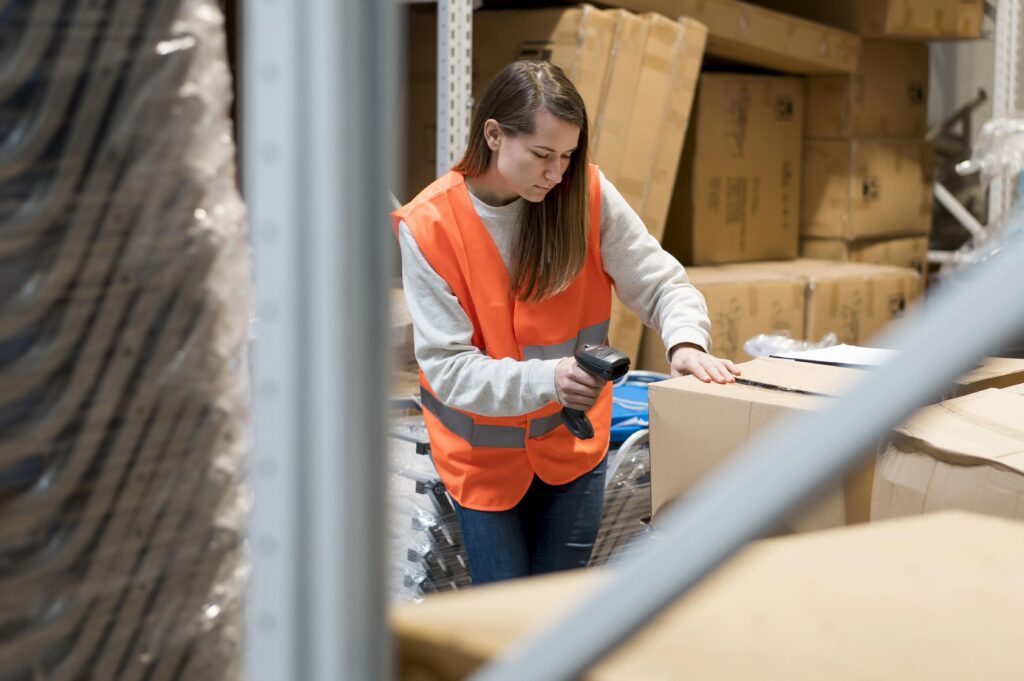
The warehouse worker locates the item from the shelves. Speed matters here a lot because customers expect quick processing.
- Packing
Your team secures items with the right materials to survive shipping. Cheap packing? That’s a refund waiting to happen.
- Shipping Label Creation
Generate labels with address and carrier details. One typo and it goes to the wrong house.
- Delivery
The package moves through carrier networks to the customer’s doorstep. This final handoff is what customers remember.
For businesses handling international orders, the fulfillment process is a bit more complicated. Customs documentation, consolidation, and regulatory compliance require specialized expertise.
Different Types of Fulfillment
When it comes to fulfillment, you’ve got choices. These are some of the common e-commerce order fulfillment services:
In-House Fulfillment
With in-house fulfillment, you do everything yourself. Rent the warehouse, hire the team, buy the systems. You’re in complete control, but you’re also on the hook for capital costs and running it day-to-day. Works if you’ve got steady orders and specific handling needs.
Third-Party Logistics (3PL)
A 3PL company helps you with the entire fulfillment process, including warehousing, packing, and shipping. This scales easily as you grow. Most growing e-commerce businesses use 3PL because the cost-per-order decreases with volume.
Dropshipping
Dropshipping flips the model. Your supplier holds inventory and ships to customers directly. Low risk to start, but you’ve got no control over quality or timing. It’s good if you’re testing whether a product will actually sell.
Hybrid Approach
Run domestic orders from your own warehouse, and outsource international orders to 3PL. A hybrid shipping approach gives you the best of both worlds. Fast local delivery and cost-effective cross-border shipping. Smart sellers mix and match.
How to Fulfill E-commerce Orders Efficiently
Start with what makes sense for your current volume. Running 50 orders monthly? Handle it yourself. At 500+? 3PL’s your friend.
Here’s what to focus on:
Automate Your Workflow
Get shipping software that talks to your store. Orders should flow to your fulfillment partner automatically, not via email or spreadsheet. Automation kills mistakes.
Maintain Inventory Visibility
You need to know what you have, where, and when. Stock-outs on bestsellers while dead inventory piles up? That’s money vanishing.
Choose Reliable Partners
Don’t just pick the cheapest option. Look for providers who offer real tracking, smart consolidation, and prices with no surprises. For international shipments, they need to handle customs and get packages to customers.
Track Your Metrics
Track order accuracy, shipping time, and cost per package. These numbers tell you where problems hide before customers complain.
Package Smartly
Make it look good, but don’t overdo it. Oversized boxes waste cash and annoy people who care about the environment.
How Tasarr Helps With Order Fulfillment
Running a cross-border business is messy. You’ve got different countries, different rules, different carriers. Tasarr takes the complete fulfillment process off your plate. We pick up your orders in the UAE, consolidate them intelligently, clear Pakistan customs for you, and hand them off to local couriers for final delivery.
The dashboard shows you everything in real-time—where packages are, what stage they’re at, and when they arrive. No surprises, no hidden costs, no ‘Where’s my package?’ messages. You focus on selling; we handle the logistics.
The Bottom Line
Pick whatever fulfillment method fits your business stage. In-house, 3PL, dropshipping, they all work for the right situation. The real goal? Get orders to customers fast and without breaking your budget. Selling internationally? That’s when you really need a partner who knows what they’re doing. It saves you headaches and lets you actually run your business.